Getting up often at night to urinate can be a significant problem for many people, especially older people, this frequent nocturnal urination, called nocturia, is the focus of this article, let’s dig in.
First off, what is the definition of nocturia? –
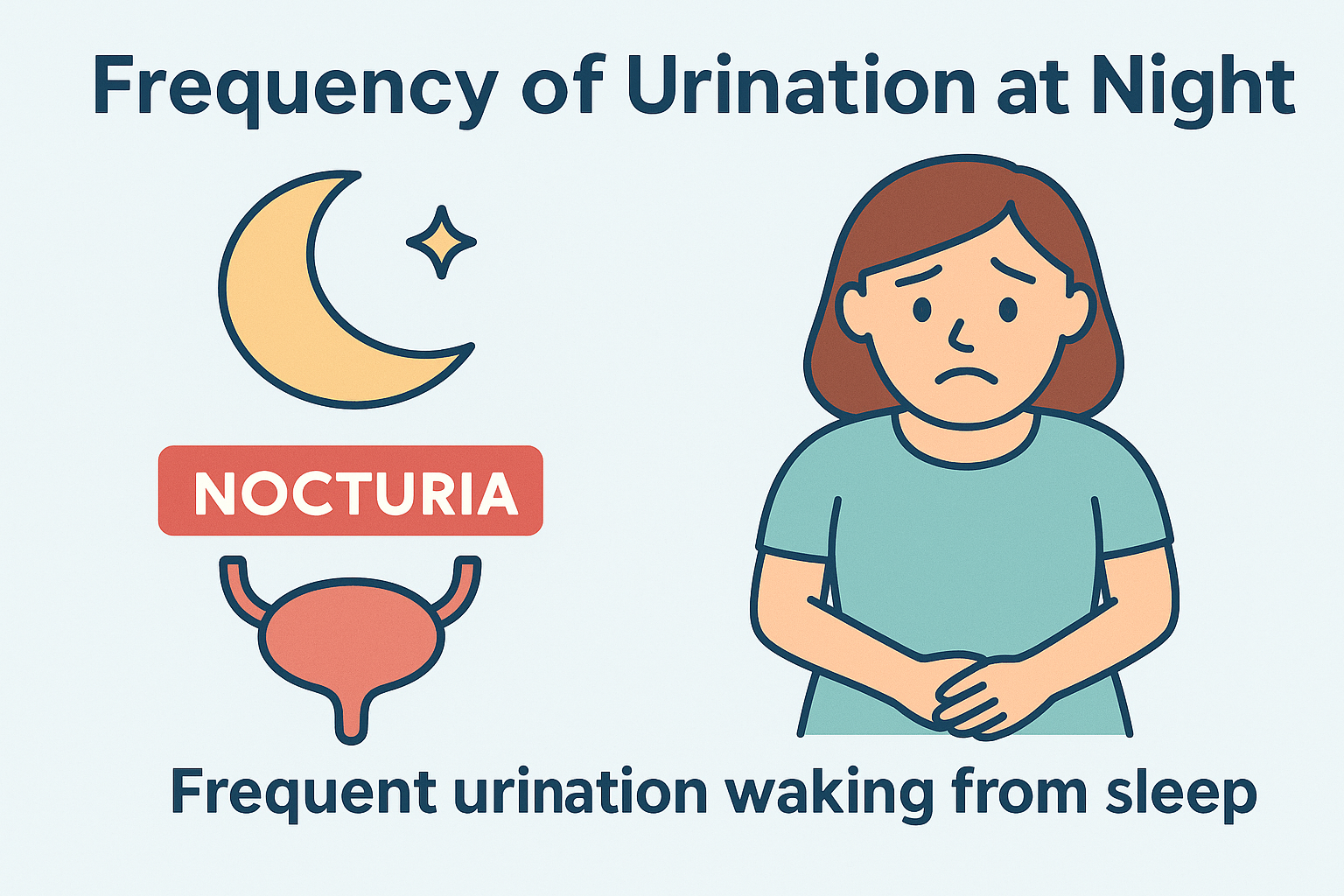
Nocturia is defined as the need to get up to urinate frequently at night. For these episodes to be classified as nocturnal urination – there must be a period of sleep before and after urination.
And exactly how much of a problem is it? –
It is actually relatively common, affecting 2 to 18 % of persons between the ages of 20 to 40 years (that’s 1 of 50 to 1 of 5 persons) and 28 to 62 % of persons between the ages of 70 to 80 years of age ( 1 out of 3 to 2 out of 3 persons) (Oelke et al 2017)
What are the significant consequences associated with nocturia?
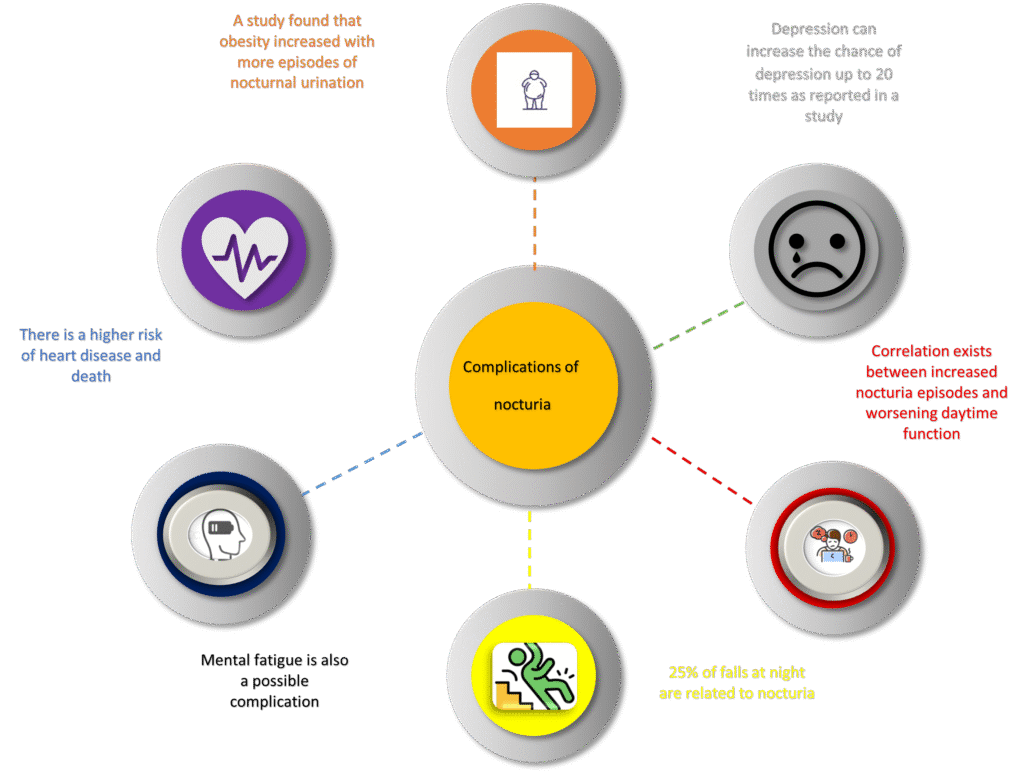
Nocturia is associated with falls, ¼ of the falls that occur in the elderly at night are linked to having to get up frequently to urinate. Falls can result in fractures, head trauma, loss of confidence in personal abilities, and risk of hospitalization.
In addition to the increased risk of falls, it causes disrupted sleep which is linked to decreased daytime physical function as well as the ability to function mentally at home or work.
An association with obesity, diabetes, heart disease, depression and worsening physical health, has been demonstrated as well. (Leslie et al 2024)
Complications associated with nocturia
What are the potential causes of nocturia?
Causes can be grouped under the following:
(1) Nocturnal polyuria – this is the most common reason for nocturia particularly in older persons. It basically means that the amount of urine excreted at night is than what is considered normal. Guidelines put this as more than 1/5 of the total daily urine in young people, and 1/3 in older people.
Late use of caffeine, using too much liquid too late and alcohol use can play a role. Other potential causes include heart failure, sleep apnea, inappropriate use of diuretics (medications that increase urination) , high use of salt, swelling in the legs and venous disease.
(2) Global polyuria- in this instance, the overall production of urine (during both the day and night), is higher than normal. This is usually more than 40 ml of urine per each KG of weight of the person in a 24-hour period or in some cases just stated to be more than 3000 ml.
Excess fluid intake for a variety of possible reasons including conditions affecting the brain function, increased calcium levels, side effects of medication, diabetes mellitus or a condition called diabetes insipidus.
(3) Bladder storage problems – If there is no increase in urine production then problems with bladder storage may be at fault. This may mean that there is increased activity with the muscles in the bladder or there is reduced ability of the bladder to store urine. Individuals may complain of passing small amount of urine frequently.
A number of different issues can potentially cause bladder storage problems such as alcohol, urinary tract infections, overactive bladder, caffeine, enlarged prostate, stones in the bladder.
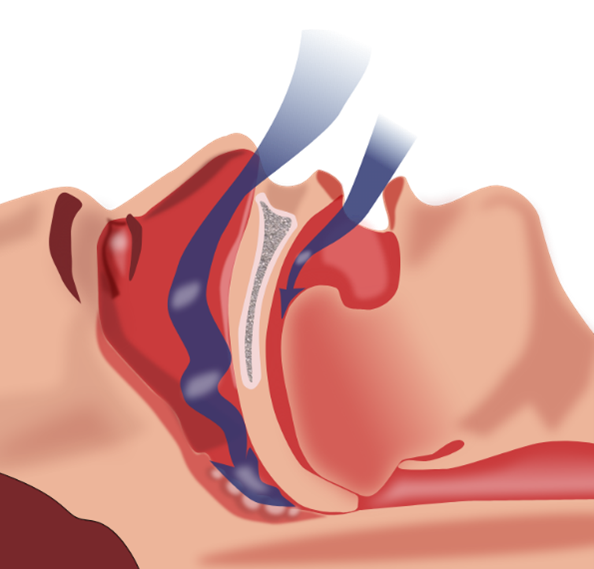
(4) sleep problems- individuals with insomnia or obstructive sleep apnea may have nocturia. It can occur in half of the people with sleep apnea.
(Leslie et al 2024 )

How is it diagnosed? –
Diagnosis requires a 24-hour voiding diary for at least 3 days- yes, you have to measure how much you drink and urinate to determine how much urine you are passing out and how much of it is at night and how frequently you need to urinate.
Information is also needed on the types and times of fluid intake as well as symptoms and signs that may point to conditions that may be contributing to nocturia and medications that may also be playing in role. (Leslie et al 2024)
What about treatment?
There are general treatment recommendations as well as treatment that would be recommended if specific contributing conditions are detected for example CPAP for obstructive sleep apnea. Additionally, there are medications that can be helpful in some cases of nocturia example desmopressin, tamsulosin, darifencin, mirabegron, trospium, vibegron.
Some of the general recommendations include:
- Reduce the amount of fluids used in the late afternoon and evening and avoid fluids within 2 hours of bedtime
- Limit the total amount of fluids used for the entire day
- Protein and salt intake should also be restricted later in the day because these also stimulate urination
- Adjust when diuretics are used- the afternoon is actually the best time for this
- If there is a history of swelling of the legs, these should be elevated just after dinner because the fluid goes back to the kidneys and causes urination, if the legs are elevated only on going to bed then this is time that there would be increased urination
- Use compression stockings if needed
- Reduce evening use of alcohol or caffeine
- Do pelvic muscle strengthening exercises
(Leslie et al 2024, Matthias et al 2017)
Bibliography:
Leslie SW, Sajjad H, Singh S. Nocturia. [Updated 2024 Feb 17]. In: StatPearls [Internet]. Treasure Island (FL): StatPearls Publishing; 2025 Jan-. Available from: https://www.ncbi.nlm.nih.gov/books/NBK518987/
Matthias Oelke, Stefan De Wachter, Marcus J. Drake, Antonella Giannantoni, Mike Kirby, Susan Orme, Jonathan Rees, Philip van Kerrebroeck, Karel Everaert. A practical approach to the management of nocturia. The international journal of clinical practice. First published: 05 October 2017.https://doi.org/10.1111/ijcp.13027
Breyer BN, Shindel AW, Erickson BA, Blaschko SD, Steers WD, Rosen RC. The association of depression, anxiety and nocturia: a systematic review. J Urol. 2013 Sep;190(3):953-7. doi: 10.1016/j.juro.2013.03.126. Epub 2013 May 13. PMID: 23680309; PMCID: PMC4153377.
Shao IH, Wu CC, Hsu HS, Chang SC, Wang HH, Chuang HC, Tam YY. The effect of nocturia on sleep quality and daytime function in patients with lower urinary tract symptoms: a cross-sectional study. Clin Interv Aging. 2016 Jun 29;11:879-85. doi: 10.2147/CIA.S104634. PMID: 27418814; PMCID: PMC4933563
Asplund R. Obesity in elderly people with nocturia: cause or consequence? Can J Urol. 2007 Feb;14(1):3424-8. PMID: 17324321.
Chen M, He W, Cai S, Chen Z, Ye H, Jin Z, Lv X. Association of nocturia with cardiovascular and all-cause mortality: a prospective cohort study with up to 31 years of follow-up. Front Public Health. 2023 Dec 21;11:1292362. doi: 10.3389/fpubh.2023.1292362. PMID: 38186694; PMCID: PMC10768185.